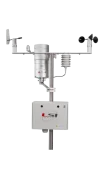
Monitoring helps operators understand how much energy a site can generate, explain changes in output and assess its impact on the surrounding area. At solar and wind farms, weather measurements put electricity generation in context. At anaerobic digestion plants, gas analysis helps operators track biogas quality, while boundary monitoring can help investigate odour episodes affecting nearby residents and businesses.
What needs to be measured?
Solar irradiance and panel temperature. Pyranometers measure the solar energy reaching the panels. Comparing irradiance and panel temperature with electricity output helps identify when a solar array is underperforming.
Wind speed and direction. Anemometers and wind direction sensors help assess potential wind farm sites and explain changes in turbine output during operation.
Biogas composition. Gas analysers measure methane and carbon dioxide to track gas quality, while hydrogen sulphide readings help operators check the performance of gas treatment before the biogas is used in an engine or upgraded to biomethane.
Air quality and odour. At biogas sites, boundary monitors can track gases such as hydrogen sulphide. Comparing readings with wind direction, site activities and the timing of complaints helps identify likely sources.
Explore AQA’s range of solar radiation sensors, weather stations, gas analysers and air quality monitors below.
ISO 9060:2018 spectrally flat Class A (secondary standard) pyranometers for global irradiance with 2% daily uncertainty, available with microvolt or RS485 Modbus output and optional heating and ventilation.
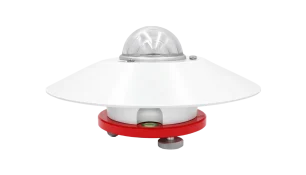
ISO 9060:2018 spectrally flat Class B (first class) thermopile pyranometers with 5% daily uncertainty, offered with microvolt, 4-20 mA or RS485 Modbus outputs.
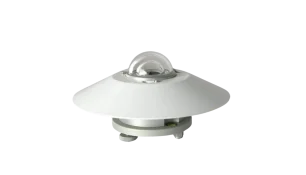
ISO 9060:2018 Class C (second class) thermopile pyranometers for routine solar monitoring, with microvolt, 4-20 mA or RS485 Modbus output and 10% daily uncertainty.
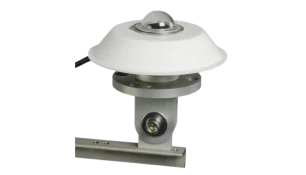
Non-tracking rotating-band sensor that measures direct solar radiation and reports sunshine status to the WMO 120 W/m2 definition, with built-in anti-condensation and defrosting heaters.
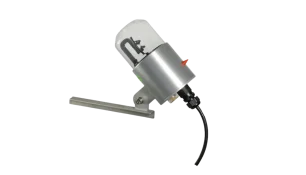
Broadband photodiode radiometers for atmospheric UV-A (315-400 nm) and UV-B (280-315 nm) irradiance, calibrated under the sun with ISO 17025 traceability and 4-20 mA output.
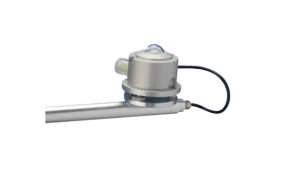
Thermopile net radiometers measuring the balance between incoming and outgoing short- and long-wave radiation over 0.3-50 um, plus a four-component DPA266 for energy-balance research.
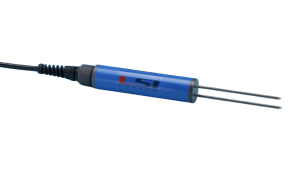
Buriable probes that measure volumetric water content and soil temperature using TDR (DQA340, analogue) or FDR capacitance (PRMPA1202, SDI-12), with no site calibration needed in mineral soils.
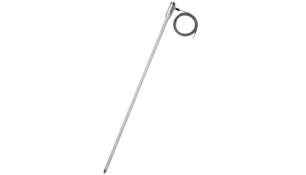
Single fibreglass probe with seven temperature points from 5 cm above the surface to 1 m depth, giving a complete soil temperature profile from one installation.
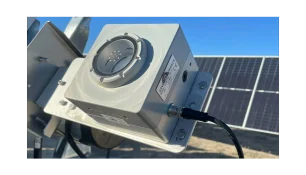
Optical soiling sensor that photographs a collection window to quantify transmission loss on photovoltaic modules with 1% accuracy, Modbus RTU output and no site calibration.
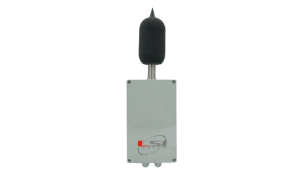
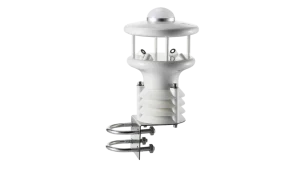
A compact multi-parameter weather sensor combining sonic wind speed and direction, temperature, humidity, pressure and optionally solar radiation or rain in one Modbus-RTU unit.
Economical professional weather station kits that pair WMO-design sensors with the E-Log data logger and 3DOM software, offered with or without rain gauge and pyranometer.