Understand what workers are exposed to and check that workplace controls are effective.
Occupational hygiene is the practice of identifying, assessing and controlling workplace hazards that can affect health. These include airborne dust, fumes, gases and vapours, as well as physical hazards such as noise, vibration and heat. Some exposures can cause immediate symptoms, while others can lead to illness over months or years.
Who can be affected?
Exposure can affect anyone carrying out a task or working nearby, including operators, maintenance staff, cleaners and contractors. The risk depends on the substance or hazard, how the work is done, how long people are exposed and what controls are in place.
Occupational hygiene applies across a wide range of workplaces, from construction sites and engineering workshops to factories, laboratories, warehouses and waste or recycling facilities. Common examples include silica dust from cutting concrete, welding fume in fabrication workshops, solvent vapours during coating or cleaning, and heat stress in foundries or other hot working environments.
What needs to be measured?
- The measurements depend on the materials, processes and tasks identified in the workplace risk assessment. They can include:
- Dust and airborne particles such as inhalable wood dust, respirable crystalline silica, welding fume and diesel particulate matter.
- Gases and vapours such as carbon monoxide from combustion and specific solvent vapours from paints, coatings or cleaning products.
- Heat stress using wet bulb globe temperature (WBGT), interpreted alongside workload and clothing.
- Noise and vibration where machinery, vehicles or power tools may expose workers to harmful levels.
How is workplace exposure assessed?
Personal air sampling measures contaminants in the air close to a worker’s nose and mouth during a specific task or over a representative part of the shift. Where a workplace exposure limit applies, the sampling method and duration are selected to allow comparison with the relevant short-term or time-weighted limit.
Fixed-point and real-time monitoring can help locate emission sources, identify peaks during particular tasks and check how conditions change when controls such as extraction or ventilation are adjusted. Together, these measurements help employers understand where exposure occurs and where controls may need improvement.
Explore AQA’s range of air sampling equipment, particle monitors, gas analysers and heat stress monitors below. We can help you select equipment for the parameter, task and measurement method you need.
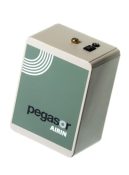
Pegasor Airin is a compact standalone monitor for monitoring ultrafine particles in indoor environments. The Airin unit uses the Pegasor PPS-G2 sensor for real-time measurement of particle number (PN), lung deposited surface area (LDSA), particle mass (PM) concentrations and also particle size. The Pegasor Airin is an ideal tool researchers, occupational hygienists, or anyone concerned about healthy indoor air to monitor ultrafine particle concentrations as recommended by the WHO (global air quality guidelines 2021).
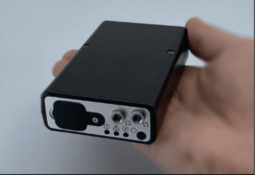
The microAeth® AL30 is a compact, palm-sized monitor for measuring Black Carbon aerosols in real-time. Small enough to be worn on the body, it features an integrated pump, flow control, battery, and data storage, making it ideal for personal exposure monitoring.With built-in WiFi, data can be easily downloaded or transmitted to AethLabs' cloud system.It runs for up to 24 hours on a single charge, sampling air through a PTFE filter strip that’s simple to replace in the field.
The microAeth® MA200 is a compact, real-time, wearable 5-wavelength UV-VIS-IR Black Carbon monitor with a 17 sampling location automatic filter tape advance system which allows for up to 12 weeks of continuous use.This self-contained device includes a pump, flow control, battery, data storage, and built-in GPS, satellite time sync, accelerometer, altimeter/barometer, and sensors for temperature and humidity. It’s optimized for low-power, mobile use, ideal for multi-day exposure studies. The spectrum measurement provides insight into the composition of light absorbing carbonaceous particles and helps to distinguish among the different optical signatures of various combustion sources such as diesel, woodsmoke, biomass, and tobacco. The instrument supports the DualSpot® loading compensation method which compensate for optical loading effects and provides additional information about aerosol optical properties.
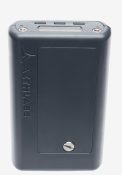
Six-channel handheld laser particle counter (0.3 to 10 µm) with a 4.3-inch colour touchscreen, 10,000-record memory and an optional temperature/humidity probe, built for ISO 14644 cleanroom classification and IAQ surveys.
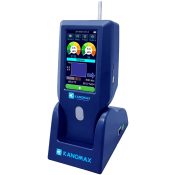
Compact six-channel portable particle counter sampling at 1.0 CFM (28.3 L/min) with 0.3 µm sensitivity, built-in printer, 6.4-inch touchscreen and 21 CFR Part 11 features for cleanroom certification.
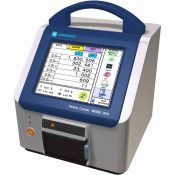
The 6 stage Viable Multistage Impactor is a multi-orifice, cascade impactor widely used as a standard to measure the concentration and particle size distribution of culturable bacteria and fungi in ambient air as well as other bioaerosols, like viruses.
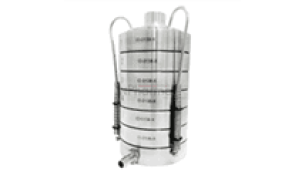
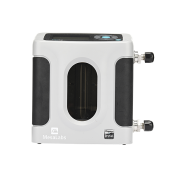
Mesa Labs’ newest standardized and volumetric primary flow standard offers easy-to-navigate calibrations with unparalleled flow ranges, accuracy and portability. The FlexCal offers flow ranges up to 50 LPM with a standardized accuracy of 0.5%, but is small, easy to carry and ready for even the most demanding of applications. When you use Mesa Labs’ FlexCal, you are guaranteed high accuracy with high confidence without the use of soap bubbles, timers, or heavy provers.