Indoor air quality (IAQ), ventilation and thermal comfort affect the people who use offices, schools, healthcare facilities and other occupied buildings. Conditions can vary from room to room and change throughout the day. Monitoring helps facilities teams investigate stuffy rooms, draughts and recurring complaints, and check whether changes to ventilation or filtration are working.
What needs to be measured?
- Indoor air quality and ventilation. Portable monitors can measure carbon dioxide (CO₂), carbon monoxide (CO), temperature and relative humidity. Tracking CO₂ alongside occupancy helps assess whether enough outdoor air is reaching busy spaces such as classrooms and meeting rooms.
- Airborne particles. Handheld particle counters measure particle number across several size ranges, helping teams compare rooms or check conditions before and after filter changes. Continuous PM₂.₅ and ultrafine particle monitoring can help identify when levels rise during indoor activities or when outdoor pollution enters the building.
- Airflow and air distribution. Hot-wire anemometers measure air velocity at supply grilles and in ducts, helping teams investigate draughts, uneven air distribution and the effects of ventilation adjustments.
- Temperature, humidity and condensation. Logging temperature and relative humidity helps reveal recurring overheating or periods of high humidity. Comparing surface temperature with the indoor air’s dew point helps identify where condensation is likely to form.
Explore AQA’s range of indoor air quality monitors, handheld particle counters, ultrafine particle monitors and airflow instruments below.
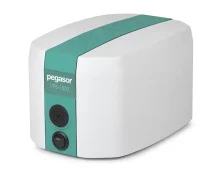
Pegasor PPS-1000
Compact indoor ultrafine particle monitor that reports particle number, lung-deposited surface area, particle mass and median size in real time, with no consumables and cloud access via an integrated modem.
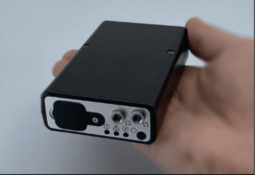
The microAeth® AL30 is a compact, palm-sized monitor for measuring Black Carbon aerosols in real-time. Small enough to be worn on the body, it features an integrated pump, flow control, battery, and data storage, making it ideal for personal exposure monitoring.With built-in WiFi, data can be easily downloaded or transmitted to AethLabs' cloud system.It runs for up to 24 hours on a single charge, sampling air through a PTFE filter strip that’s simple to replace in the field.
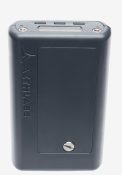
The microAeth® MA200 is a compact, real-time, wearable 5-wavelength UV-VIS-IR Black Carbon monitor with a 17 sampling location automatic filter tape advance system which allows for up to 12 weeks of continuous use.This self-contained device includes a pump, flow control, battery, data storage, and built-in GPS, satellite time sync, accelerometer, altimeter/barometer, and sensors for temperature and humidity. It’s optimized for low-power, mobile use, ideal for multi-day exposure studies. The spectrum measurement provides insight into the composition of light absorbing carbonaceous particles and helps to distinguish among the different optical signatures of various combustion sources such as diesel, woodsmoke, biomass, and tobacco. The instrument supports the DualSpot® loading compensation method which compensate for optical loading effects and provides additional information about aerosol optical properties.
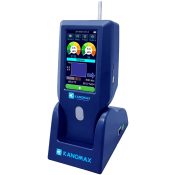
Six-channel handheld laser particle counter (0.3 to 10 µm) with a 4.3-inch colour touchscreen, 10,000-record memory and an optional temperature/humidity probe, built for ISO 14644 cleanroom classification and IAQ surveys.
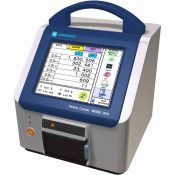
Compact six-channel portable particle counter sampling at 1.0 CFM (28.3 L/min) with 0.3 µm sensitivity, built-in printer, 6.4-inch touchscreen and 21 CFR Part 11 features for cleanroom certification.
The Model 106-L Ozone Monitor is designed for measurements of ozone concentrations ranging from low ppb levels up to 100 ppm (100,000 ppb). This highly accurate ozone monitor (1.5 ppb) has a low limit of detection (3.0 ppb for 10 second measurements) and is certified by the EPA as a FEM for monitoring for compliance with the US Clean Air Act: EQOA-0914-218.

EPA-certified Federal Equivalent Method (FEM) dual-beam UV absorption at 254 nm with two detection cells to improve precision, baseline stability, and response time. Lightweight with low power consumption and a quiet, long-life internal air pump. For research and monitoring applications where high precision and/or fast response are required.

Handheld EPA-certified ozone monitor capable of providing highly accurate/precise ozone measurements in a package that is unique to the ambient ozone monitoring market.

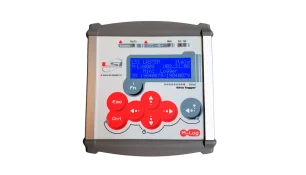
Compact battery-powered logger for indoor microclimate, thermal comfort and IAQ surveys, with four analogue inputs, sensor auto-recognition and a built-in library of ISO 7730 and ISO 7243 calculations.