Livestock housing, feed handling, manure storage and slurry spreading can release gases, dust and odours. These can affect animals and farm workers inside sheds, as well as people living nearby. Monitoring helps farmers understand when levels rise and check whether changes to ventilation, manure handling or spreading practices are effective.
What needs to be measured?
Ammonia and odour. Ammonia (NH₃) monitoring can help identify emission peaks around livestock housing, manure stores and during spreading. At the farm boundary, comparing gas readings with wind direction, farm activities and the timing of complaints can help trace likely odour sources.
Dust and airborne particles. Particle monitors can track changes in dust levels during feeding, bedding changes and grain handling, helping operators identify which tasks generate the most dust.
Housing conditions. Temperature, humidity and carbon dioxide readings can help assess ventilation in enclosed livestock buildings and identify when conditions may contribute to heat stress.
Weather and soil conditions. On-farm weather stations record rainfall, wind speed and direction. Paired with soil moisture sensors, these measurements can also help growers decide when to irrigate.
Explore AQA’s range of gas and particle monitors, weather stations and environmental sensors below.
Compact outdoor air quality monitor that measures up to five gases plus particulate matter at once, using swappable smart cartridges, with cloud reporting, remote calibration and battery or solar operation.
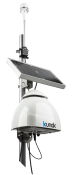
Smaller sibling of the AIR Pro for projects that need particulate matter plus up to two gases, with the same cartridge system, cloud platform, remote calibration and autonomous battery or solar operation.
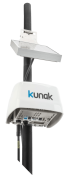
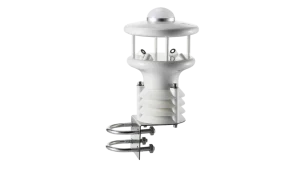
A compact multi-parameter weather sensor combining sonic wind speed and direction, temperature, humidity, pressure and optionally solar radiation or rain in one Modbus-RTU unit.
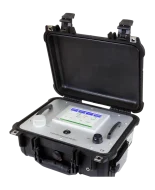
Portable biogas analyser for CH4, CO2, O2 and H2S in a military-grade shockproof case. Lithium battery for long field autonomy, colour touchscreen and CSV export to USB, with maintenance and calibration the user can do on site.
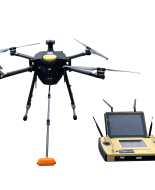
Drone-mounted methane analyser using a TDLAS laser sensor to map CH4 in ppm over pipelines, landfills and farms. Automated mission flights, 5G control and a ground station showing live gas and flight data.