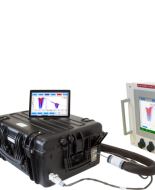
Syngas, is produced by processes such as the gasification of biomass, waste or other carbon-containing feedstocks. Its main combustible components are hydrogen and carbon monoxide. The composition varies with the feedstock and operating conditions, and the gas can be used to generate heat and power or processed further to produce hydrogen, fuels or chemicals.
Monitoring at the gasifier outlet, after gas cleaning and before end use helps plant operators understand where gas quality changes and whether the gas meets the needs of downstream equipment.
What needs to be measured?
Gas composition. Measuring hydrogen (H₂), carbon monoxide (CO), methane (CH₄) and carbon dioxide (CO₂) helps operators track how changes in feedstock or operating conditions affect gas quality. Oxygen (O₂) readings can provide additional information where air ingress or residual oxygen is a concern.
Fuel quality. Gas composition can be used to estimate calorific value. Paired with gas flow measurements, this helps operators track the energy delivered to a boiler, engine or other combustion equipment.
Hydrogen-to-carbon monoxide ratio. The H₂-to-CO ratio is important when syngas is used to make fuels or chemicals. Measuring it before and after gas conditioning helps operators check whether the composition meets the requirements of the downstream process.
Contaminants and gas cleaning. Depending on the feedstock and end use, raw syngas can contain tars, particles, moisture and compounds such as hydrogen sulphide (H₂S) and ammonia (NH₃). Targeted measurements before and after treatment help check removal performance and protect downstream equipment from fouling or corrosion.
Explore AQA’s range of fixed and portable syngas analysers for continuous process monitoring, commissioning and on-site checks.
Fixed, continuous gas analyser for biogas, syngas and biomethane plants. Measures CH4, CO2, O2, H2S and H2 using NDIR and electrochemical sensors, housed in a stainless steel wall-mount or 19-inch rack enclosure with a colour touchscreen.
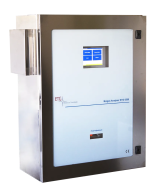
Portable syngas analyser that reads CH4, CO, CO2, H2 and O2 simultaneously in real time. NDIR, thermal conductivity and electrochemical sensors in a shockproof case, with a 7-inch touchscreen and CSV export to USB.
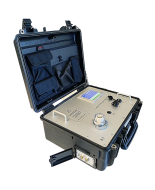
Multicomponent FTIR gas analyser that quantifies many gases at once from a single infrared spectrum. 0.5 cm-1 resolution, 5 m optical path and heated cell options, offered in 19-inch rack, portable and wall-mounted versions.