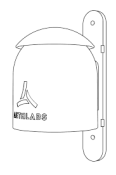
Aircraft, ships, ground support equipment, cargo handling and road traffic can all contribute to local air pollution. Monitoring around runways, terminals, berths and site boundaries helps operators understand when pollution peaks occur and which activities may be affecting staff, passengers and nearby communities.
What needs to be measured?
Ultrafine particles (UFP). Particle number monitors can detect short-lived peaks associated with aircraft movements, ship activity and diesel-powered equipment. Measuring particle number alongside PM₂.₅ and PM₁₀ gives a fuller picture of airborne particles around the site.
Airborne gases. Nitrogen dioxide (NO₂) and nitrogen oxides (NOₓ) can help assess the contribution of combustion sources. At ports, sulphur dioxide (SO₂) may also be relevant when investigating ship emissions.
Weather conditions. Comparing wind speed and direction with pollution readings and operational records helps identify likely sources and show how emissions travel beyond the site boundary.
Runoff and drainage. Where site activities pose a risk to water quality, online analysers can track hydrocarbons from fuel and oil or changes in organic load associated with airport de-icing runoff.
Explore AQA’s range of ultrafine particle monitors, ambient gas analysers, air quality sensors, weather stations and water quality analysers below.
The Pegasor Airam is an advanced, standalone ultrafine particle (UFP) monitor designed for real-time outdoor air quality monitoring. Airam provides comprehensive data on particulate pollution, including particle number (PN), lung deposited surface area (LDSA), particle mass (PM), and particle size. The Pegasor PPS-G2 sensor operation is based on the unique Pegasor technology that combines diffusion charging with the “escaping current” technology. With this method, particles flow through the sensor and are not collected inside the system, making the maintenance intervals extremely long, even up to years in air quality monitoring applications. The Pegasor Airam system is built within a weather-proof cabinet and equipped with extensive self-diagnostics.
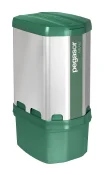
Pegasor Airin is a compact standalone monitor for monitoring ultrafine particles in indoor environments. The Airin unit uses the Pegasor PPS-G2 sensor for real-time measurement of particle number (PN), lung deposited surface area (LDSA), particle mass (PM) concentrations and also particle size. The Pegasor Airin is an ideal tool researchers, occupational hygienists, or anyone concerned about healthy indoor air to monitor ultrafine particle concentrations as recommended by the WHO (global air quality guidelines 2021).
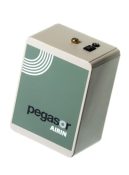
Pegasor PPS-1000
Compact indoor ultrafine particle monitor that reports particle number, lung-deposited surface area, particle mass and median size in real time, with no consumables and cloud access via an integrated modem.
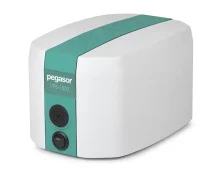
Compact outdoor air quality monitor that measures up to five gases plus particulate matter at once, using swappable smart cartridges, with cloud reporting, remote calibration and battery or solar operation.
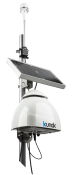
Smaller sibling of the AIR Pro for projects that need particulate matter plus up to two gases, with the same cartridge system, cloud platform, remote calibration and autonomous battery or solar operation.
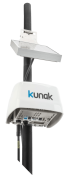
The Scout SD1 is a real-time, low-cost multi-pollutant air monitor featuring dual PM sensors. This compact and highly capable device measures a variety of air quality parameters, providing detailed and actionable data in real-time. Designed for versatility, Scout is suitable for a wide range of applications.The Scout SD1 can measure Particulate Matter Mass Concentration (PM1, PM2.5), Particle Count (PM0.5, PM1, PM2.5), Carbon Dioxide (CO2), Nitrogen Oxides (NOx), Total Volatile Organic Compounds (tVOC), Temperature (T), and Relative Humidity (RH). It’s designed to deliver comprehensive air quality insights, helping users monitor environmental conditions effectively.