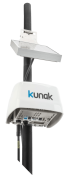
Connected monitoring networks help councils understand how air pollution, noise and heat vary from street to street. Placing monitors near busy roads, schools, residential areas and parks shows where and when people are most exposed. Councils can use the data to investigate local hotspots, share information with residents and assess the effects of measures such as school streets or changes to traffic routes.
What needs to be measured?
Air quality. Compact monitoring stations can continuously track nitrogen dioxide (NO₂) and particulate matter (PM₂.₅ and PM₁₀). Black carbon and ultrafine particle monitors can add detail where traffic emissions are a particular concern.
Environmental noise. Noise monitors show how sound levels change through the day and help investigate recurring peaks near major roads, construction sites or nightlife areas.
Weather and urban heat. Wind speed and direction help explain how pollution moves through a neighbourhood. Comparing temperature readings from built-up streets and nearby green spaces helps identify areas that stay hotter during hot weather.
Explore AQA’s range of connected air quality sensors, specialist particle monitors and weather stations below.
The Scout SD1 is a real-time, low-cost multi-pollutant air monitor featuring dual PM sensors. This compact and highly capable device measures a variety of air quality parameters, providing detailed and actionable data in real-time. Designed for versatility, Scout is suitable for a wide range of applications.The Scout SD1 can measure Particulate Matter Mass Concentration (PM1, PM2.5), Particle Count (PM0.5, PM1, PM2.5), Carbon Dioxide (CO2), Nitrogen Oxides (NOx), Total Volatile Organic Compounds (tVOC), Temperature (T), and Relative Humidity (RH). It’s designed to deliver comprehensive air quality insights, helping users monitor environmental conditions effectively.
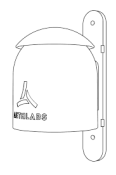
Compact outdoor air quality monitor that measures up to five gases plus particulate matter at once, using swappable smart cartridges, with cloud reporting, remote calibration and battery or solar operation.
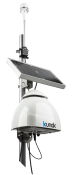
Smaller sibling of the AIR Pro for projects that need particulate matter plus up to two gases, with the same cartridge system, cloud platform, remote calibration and autonomous battery or solar operation.