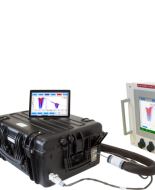
Anaerobic digestion turns organic materials such as food waste, farm slurry and sewage sludge into biogas. Raw biogas contains mainly methane and carbon dioxide, along with moisture and smaller amounts of contaminants. It can be used to generate heat and power or upgraded to biomethane by removing carbon dioxide and other impurities.
Gas monitoring helps operators track changes in digester output, check that gas cleaning and upgrading systems are working, and verify gas quality before use or grid injection. Monitoring around the plant can also help investigate odours affecting nearby communities.
What needs to be measured?
Raw biogas composition. Continuous measurement of methane (CH₄) and carbon dioxide (CO₂) shows how gas quality changes with feedstock and operating conditions. Methane concentration, combined with gas flow, helps operators track how much energy the plant is producing. Oxygen (O₂) readings can help flag air ingress or changes in processes that use controlled air dosing.
Gas cleaning and engine protection. Measuring hydrogen sulphide (H₂S) before and after treatment helps operators spot when removal performance starts to fall. Depending on the feedstock and end use, moisture and trace contaminants such as siloxanes may also need to be measured to help prevent corrosion and deposits in engines.
Upgrading performance and methane slip. Measuring methane and residual CO₂ in the upgraded gas helps check product quality. Measuring methane concentration and flow in the upgrader’s off-gas helps quantify how much methane is being lost and assess recovery performance.
Biomethane quality at grid entry. Gas composition, oxygen, sulphur compounds, water dew point and combustion properties such as calorific value and Wobbe Index may need to be measured or calculated. The applicable requirements depend on the receiving gas network and the site’s grid-entry agreement.
Site boundary and odour. Ambient monitors can track gases such as hydrogen sulphide around feedstock reception, digestate storage and the site boundary. Comparing readings with wind direction and operating records helps investigate odour episodes and check whether controls are effective.
Explore AQA’s range of fixed and portable gas analysers, trace gas instrumentation, ambient air quality monitors and weather sensors below.
MCerts and TÜV Certified { EN 15267-4:2024 | EN 12619:2013 | QAL1 (EN 14181} the OneFID is a cutting-edge Heated Flame Ionization Detector (HFID) featuring a proprietary, patented injection system that allows for the simultaneous measurement of Total Hydrocarbons (THC), methane (CH₄), and non-methane hydrocarbons (NMHC) using a single detector. This innovative design simplifies system architecture, reduces operational complexity, and ensures exceptional measurement accuracy, long-term reliability, and full regulatory compliance for industrial emissions monitoring applications.
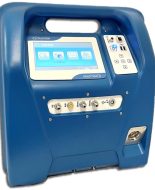
Fixed, continuous gas analyser for biogas, syngas and biomethane plants. Measures CH4, CO2, O2, H2S and H2 using NDIR and electrochemical sensors, housed in a stainless steel wall-mount or 19-inch rack enclosure with a colour touchscreen.
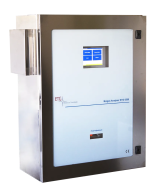
Portable biogas analyser for CH4, CO2, O2 and H2S in a military-grade shockproof case. Lithium battery for long field autonomy, colour touchscreen and CSV export to USB, with maintenance and calibration the user can do on site.
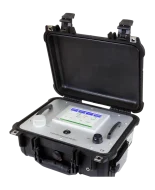
Wall-mounted photoacoustic analyser that tracks trace CO2 and water vapour in biomethane destined for liquefaction, where even ppm-level contamination can freeze and damage LNG equipment.
Multicomponent FTIR gas analyser that quantifies many gases at once from a single infrared spectrum. 0.5 cm-1 resolution, 5 m optical path and heated cell options, offered in 19-inch rack, portable and wall-mounted versions.